
Indiana Arrests by County
Indiana has no single live arrest list. Arrest records are born at the agency level. Police departments, sheriffs, and other arresting agencies create incident records. The receiving jail creates the booking and custody record. A state or town officer may make the arrest far from where the person is booked. The county in a news release is not always the booking county. So ask first which agency made the arrest, and which facility received the person.
The official INjail site is the broadest shared starting point. It covers participating counties only. A live custody search suits a recent booking. For deeper questions, other records take over. The arresting agency's report and the court file hold what a roster cannot show. Someone released may vanish from the current roster. The booking record does not disappear with release. The sheriff or jail records unit may still hold it under Indiana's retention schedule. When the shared search skips a place, the county directory helps. It leads to the right local source for that county's arrests.
The official INjail search page offers a county and date filter. It is not one all-state arrest feed.
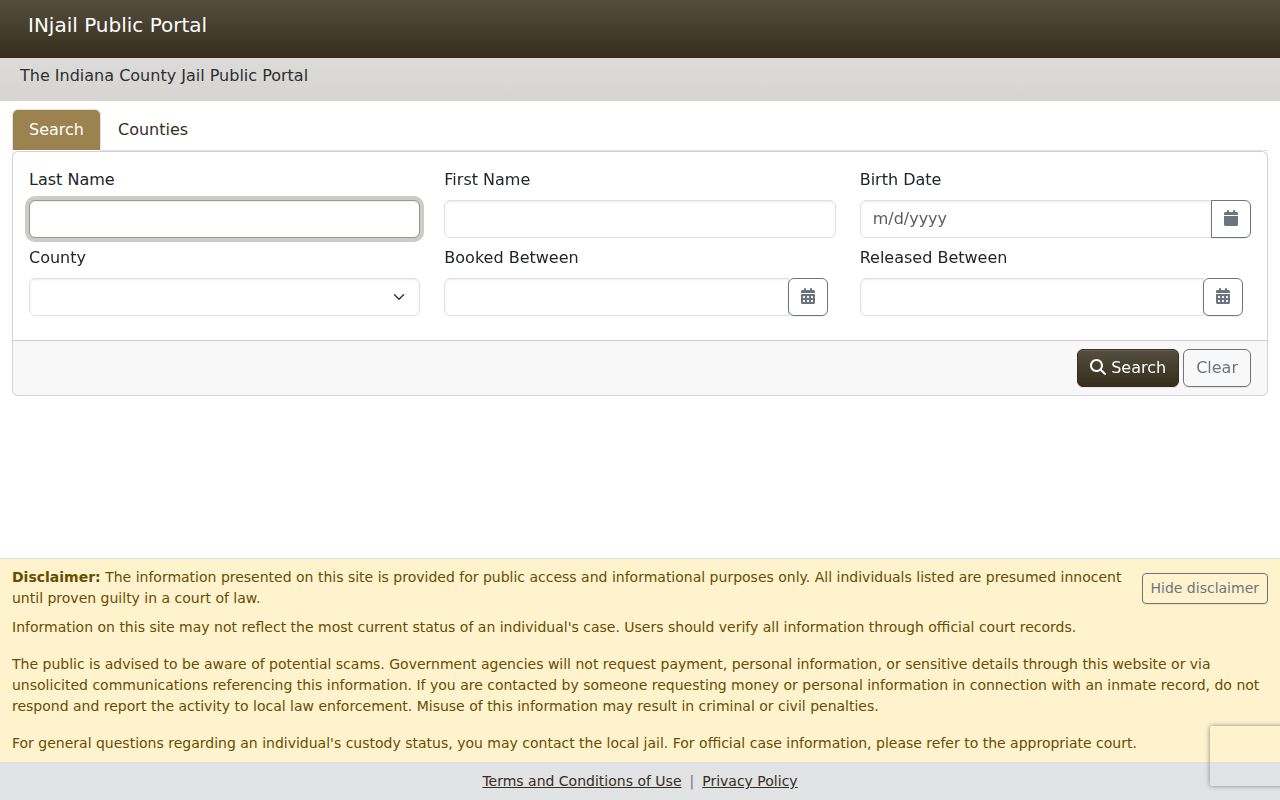
Use its filters; no-result screens require the county custodian.
Indiana's Fourteen-County Jail Feed
INjail lists 14 participating counties. They are Brown, Carroll, Clark, Elkhart, Fountain, Grant, Hendricks, Jennings, Martin, Pike, Putnam, Spencer, Warren, and White. That list is a participation snapshot. It is not a promise of statewide arrest coverage. Counties absent from the portal may run their own sheriff page, a vendor site, or a public-records request process. An absent county may still hold booking records.
The published county list for INjail shows which places are connected during a search. The list shifts as agencies join, leave, or alter their feeds. One more caution matters here. The search application describes a 30-day scope, but that is a web-display limit. Indiana does not destroy older booking records after a month. Retention belongs to the record schedule and the agency holding the file.
County systems also differ in what they display. Some public pages offer current and released views, date fields, and a photo when the source provides one. Others show custody with no photo field at all. A missing image can reflect policy or feed conditions. Treat the state portal as one route among many, not an index of every county's arrests.
- Check the participating-county list and choose the county tied to the arrest or booking.
- Search the person's name and available birth-date details, then narrow by booking or release date within the application's displayed window.
- Compare the booking number, facility, intake date, charge wording, and custody status before treating a match as the right person.
- If the county is absent, the record is too new, or the result is unclear, check that county's sheriff or jail source and contact its records unit.
The INjail county endpoint records that participation snapshot on the research date.
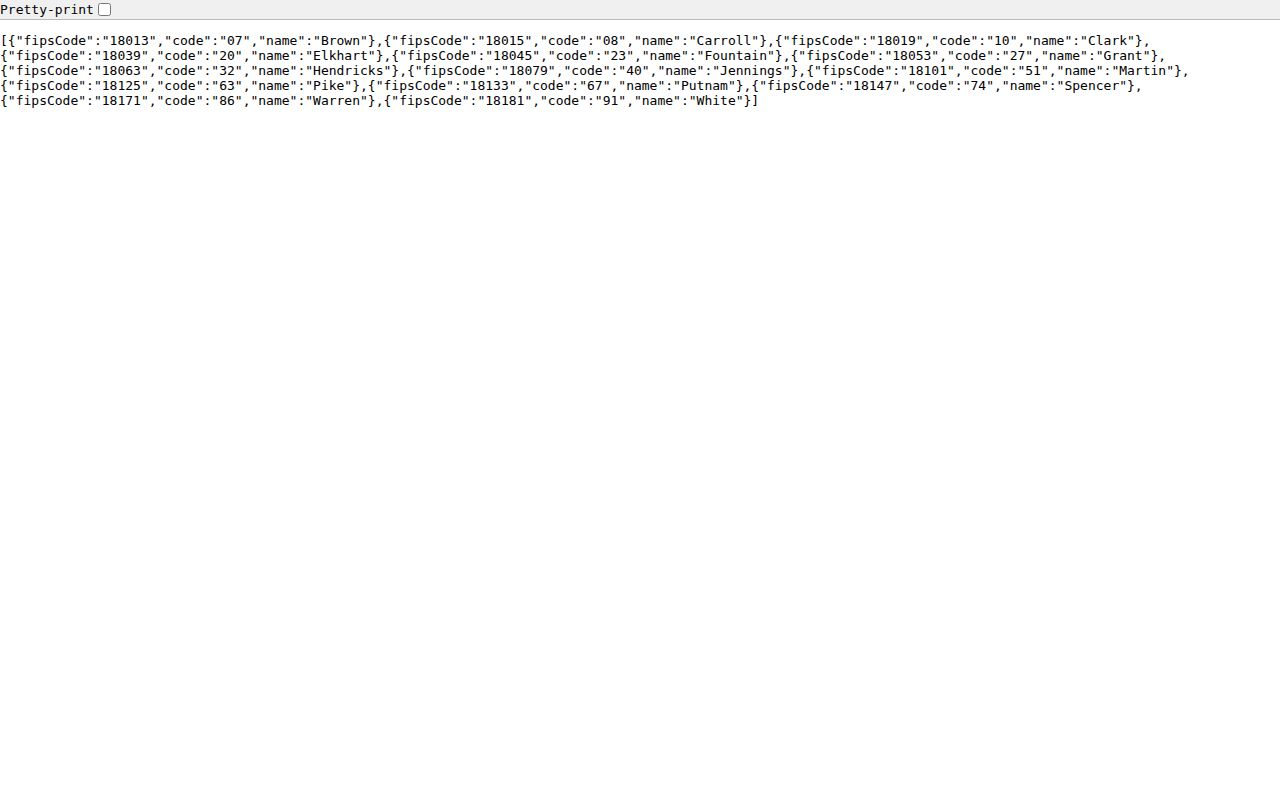
Check the live county list before treating a missing result as meaningful.
Indiana Booking Records Explained
A booking record begins when a person reaches a jail or other receiving facility. The local file can cover custody, transfer, and release. Indiana's jail rule spells out what it holds. The list includes a booking number, the intake date and time, name and aliases, the reason for detention, charges, a mugshot, fingerprints, a physical description, demographic details, and court or sentence information. The public web roster shows only some of that. A blank or shortened page is not the full agency record.
The INjail search works differently. It uses its own fields to find a person or narrow the time range. Those filters are not the booking data itself. Search inputs and record details are two different things. The inventory below separates them so a request can name the right item.
| Layer and field | What it can show |
|---|---|
| INjail: first and last name | Search keys for a person in a participating county's data. |
| INjail: birth date and county | Additional match details and a county filter. |
| INjail: booked-between / released-between | Date ranges for intake or release within the application's displayed scope. |
| County intake: booking number and date/time | An identifier and the recorded time the facility processed intake. |
| County intake: name, aliases, reason, charges | Identity details and the stated basis for detention as entered at booking. |
| County intake: photo, fingerprints, description | Identification data retained by the custodian; a public page may suppress it. |
| County intake: court or sentence details | Related case or sentence information, which may be updated after booking. |
Fields differ by system and record type. A state criminal-history result, a court docket, and a jail booking file are separate products. Name the record you want before requesting a copy. Give the best known person, agency, county, and arrest or booking date. Precision pays off here. A clear request is less likely to return a mere roster entry when an incident report or photograph is wanted.
Indiana Arrest Feed Time Windows
Each public source answers a different time question. A same-day view helps locate a new booking. A custody page shows who is still held. A longer blotter or a records request preserves the event after a person's release. A statewide alert service follows one person's status, a court file follows a case, and neither gives a complete arrest history.
| Window or source | What it can answer | Next route |
|---|---|---|
| Same-day county booking | Whether a recent intake appears in a participating or local county feed; transmission time is not guaranteed. | Use the Daily Arrest Report landscape, then check the county source. |
| Multi-day roster or log | Whether the agency keeps released entries, a daily log, or a longer web window. | Use the Weekly Arrest Log landscape and confirm the county source's scope. |
| Indiana SAVIN | Custody, placement, transfer, release, or other status changes for a person in the covered system. | Use the state alert portal; it is not a photo archive. |
| MyCase | Public case events, hearings, filings, and dispositions when indexed. | Use the clerk for the official case record. |
| IDOC or federal locator | State-prison or federal custody after transfer into those systems. | Use the agency locator for that custody level. |
Check each result's window, update time, and custodian. The official MyCase search screen is a court-record route, not a jail roster or a live warrant check.
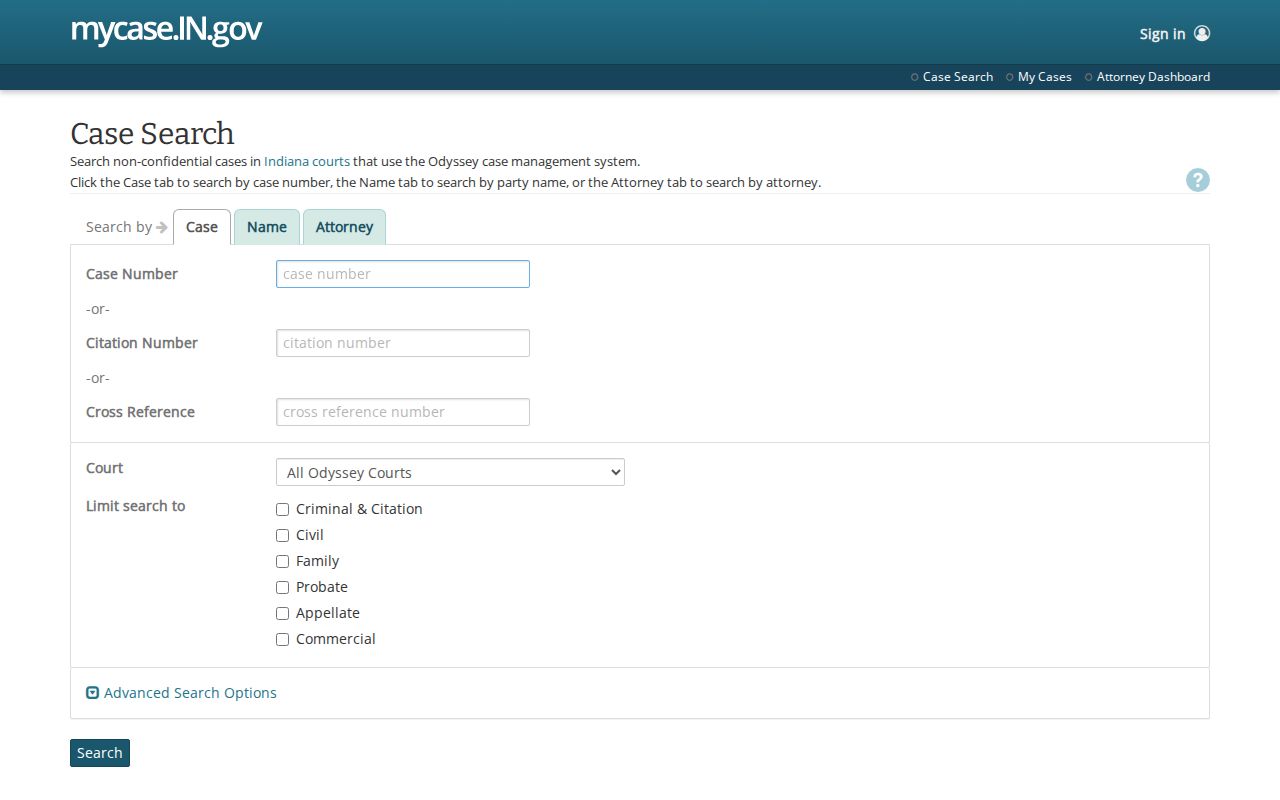
A case record can lag behind a real arrest. It may even show a disposition without confirming who is in custody now. For one person, Indiana SAVIN works better. The free service sends custody and status alerts. Its coverage reaches all 92 counties, per the state FAQ. County landing pages vary, though, and a search can trail a new booking. For intake fields and the arrest report itself, a live jail view or the records unit still beats it. The Indiana SAVIN FAQ page describes this custody-notification service in detail.
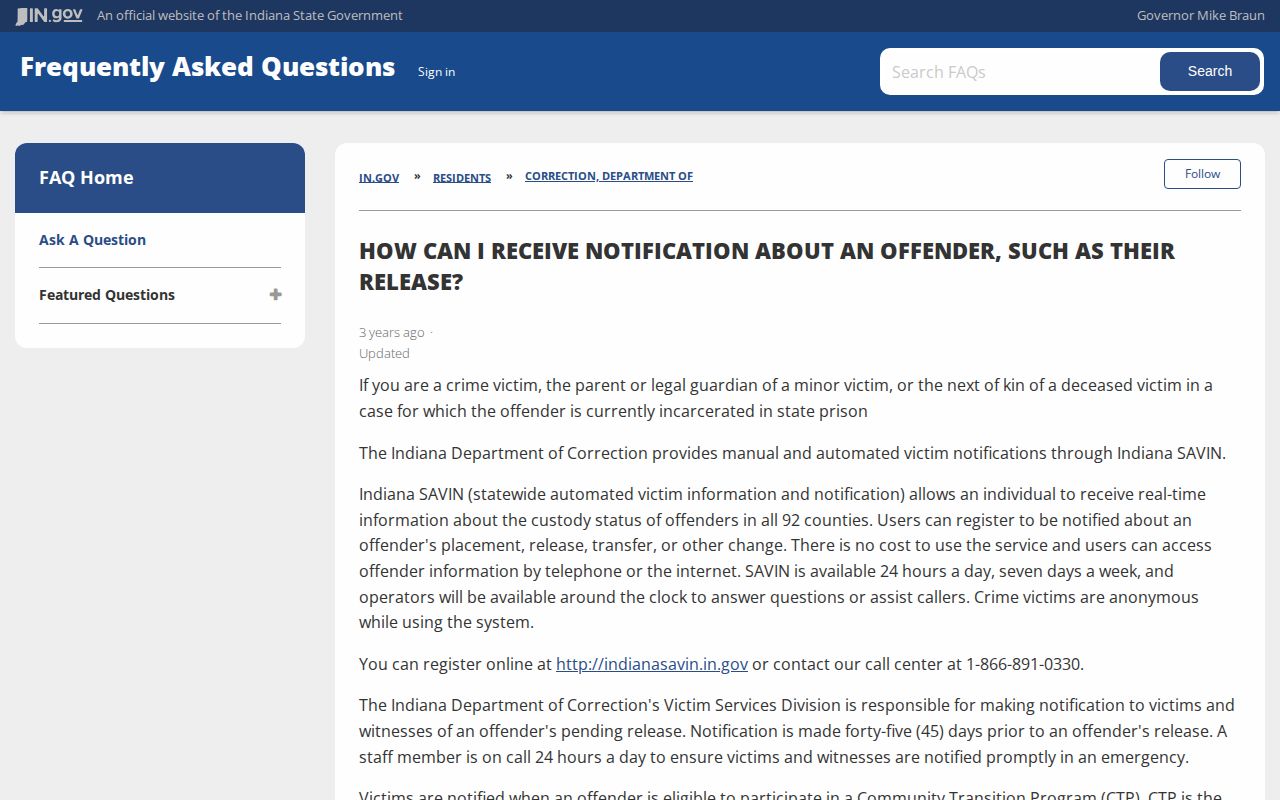
Use SAVIN to follow one person's custody changes. It is not a booking-photo search.
Indiana Mugshots and Booking Photos
Indiana has no single mugshot statute. No law grants the public an automatic right to every arrest photo online. None bans publication outright, and none creates a general pay-to-remove remedy. A booking photo may be public under APRA. The custodian applies the exceptions. Sealing rules, juvenile protections, and court orders can all limit access. Even a public record need not land on a county web roster. Posting a photo is a local choice. Availability varies by county interface. Some counties show images on their lookup pages, while Delaware County's lookup displays no photo field. INjail can list a booking with no image attached. A missing photo reflects display policy, not the absence of an arrest. County jails and sheriffs remain the first stop for a booking image. The state IDOC search covers prison custody only. It promises no public booking photo. The statewide sources below run from official records to private discovery pages, and none serves as a complete Indiana roster.
| Source | What it may show | Scope and limit |
|---|---|---|
| County sheriff or jail | Current custody, released entries, intake details, and photos when posted. | Official custodian; fields, photo policy, and web window vary by county. |
| INjail | Searches for participating counties and their supplied booking data. | Official shared portal with a 14-county snapshot and a 30-day search window; not all Indiana. |
| Arresting agency and Indiana State Police | Incident reports and selected enforcement or arrest releases. | Official records, but no statewide daily all-arrests list was located. |
| Indiana courts / MyCase | Public case filings, hearings, and later dispositions. | Official court source, not live custody and not a booking-photo index. |
| IDOC and Indiana Archives | State correctional records and selected historic inmate or portrait holdings. | Official post-sentencing or archival material, not a current county booking roster. |
| RecentlyBooked Indiana | County-linked booking material generally described as covering about 30 days. | Private subset, not all counties; entries can be incomplete or stale. |
| Mugshots.com Indiana | Historical and county-section material with counts and images. | Private archive; counts may not match a current official roster. |
| Busted Newspaper Indiana | County-derived booking entries and photos where available. | Secondary and selective; a copied listing may not reflect a later court result. |
| Arrests.org Indiana | Recent booking-style entries, charges, bond, dates, and photos when supplied. | Reviewed page covered only part of the state and disclaimed completeness. |
| Mugshots.zone | Indiana county-subdomain pages rather than a dependable statewide roster. | Private, uneven coverage; check the original county custodian. |
Requesting Indiana Arrest Records
No public page? Ask the office that holds the record. Arrest reports start with the arresting police agency or the sheriff. Intake logs, custody records, and booking photos belong to the receiving jail or its county records custodian. ISP arrest and incident reports go through the ISP public-records portal. One caution on fees. The ISP limited criminal history fee is not a price for a jail search or a booking photograph. Those are different services. Indiana APRA sets response clocks. An oral or hand-delivered request generally draws a reply within 24 business hours. A written request sent by mail, email, or fax gets seven calendar days. These are deadlines to respond, not to produce records. A custodian may acknowledge the request, estimate production, deny it with a legal basis, report that no record exists, or say review continues. Copy and labor fees follow each office's lawful schedule. The Public Access Counselor handbook spells out the state process and denial rules.
- Identify whether the arresting agency or receiving jail holds the item. If the booking county is uncertain, begin with the news release, jail search, or court case.
- Describe the person, approximate arrest or booking date, county, and record type. Ask separately for an incident report, daily log, intake record, and booking photo when those items are needed.
- Send the request through the custodian's stated APRA route. Ask for an estimate of copy or labor charges before work proceeds.
- If access is denied, request the specific statutory ground and the name of the responsible custodian. A requester may ask the Indiana Public Access Counselor about the denial.
Old county files follow retention schedules, not web page age. IARA schedules keep adult inmate custody files for ten years after incarceration ends. A roster's shorter display window is a different rule. Historical state correctional collections may hold older inmate books and selected portraits. Collection limits and image rights still apply. The State Archives fee page lists separate research, copy, scan, and reproduction charges.
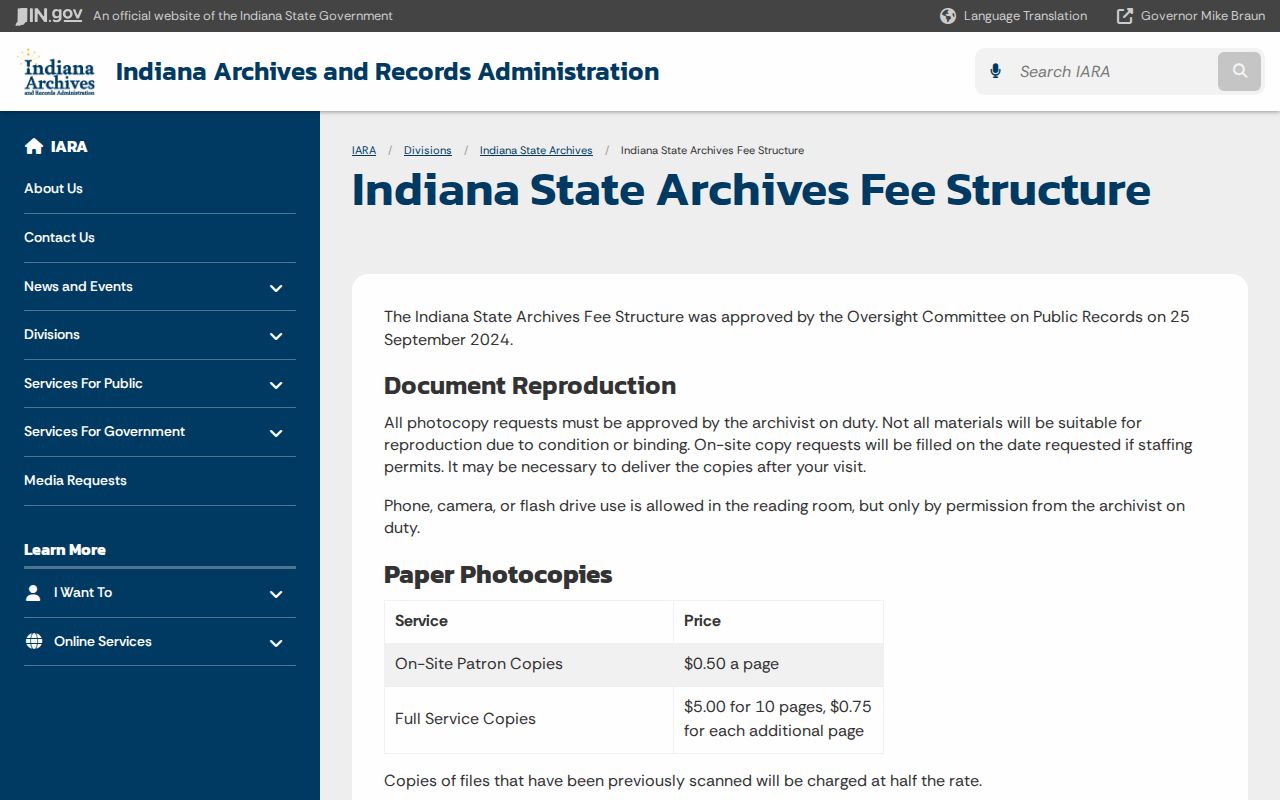
Archive work is never a same-day jail search.
Indiana Arrest Law and Removal
Indiana's Access to Public Records Act, Ind. Code § 5-14-3, leans toward public access. But the law carves out exceptions. Some are required, others discretionary. An investigatory-record claim cannot blanket every arrest photo. The custodian must apply one consistent policy and explain the legal basis for withholding anything. A judge may order an unserved warrant kept confidential. Juvenile records, sealed cases, protected details, and court orders create separate limits. What a public agency releases is also distinct from what a private publisher chooses to display.
Indiana's House Bill 1170 proposed an arrestee-publicity law in 2022. The bill failed. No Indiana mugshot-specific law forces a private publisher to remove a truthful booking entry, for money or for free. Some publishers offer no-fee correction routes anyway. Those are private policies. They do not erase the official record. Busted Newspaper describes a document-backed request with a roughly five-to-ten-day review. RecentlyBooked lists eligible no-fee requests but says accurate current public information may remain. Mugshots.com charges nothing for updates and may take up to 10 business days. Mugshots.zone posts a no-charge request on a representative county page, though terms can vary. Arrests.org states no clear free-removal rule. A court order governs only the custodians it covers. Old screenshots, cached results, and outside copies may need separate correction steps. Never pay a broker who claims payment is required to use a legal remedy.
For an expunged record, follow the court order. Contact the original agency and publisher with supporting documents. A search engine refresh request may update the index if a source page changed or disappeared. That refresh cannot create a court order or erase a publisher's copy. Skip the removal broker. Treat no online entry as final proof. Indiana's eligibility periods and public-access effects depend on the charge, the outcome, the offense category, the sentence, later records, and statutory exclusions. The court's current order controls.
Indiana Warrants and Wanted Lists
Indiana keeps warrant information at the agency level. There is no single public statewide warrant roster. A warrant is a court order authorizing law enforcement to take a stated action, which can include an arrest. County sheriffs and courts are the right starting point for a county warrant question. MyCase can show case events, hearings, or a disposition. It is not a live warrant or custody system. An unserved warrant may be withheld when a judge orders confidentiality. So an empty public search settles nothing. Ask the issuing court or agency, or speak with an attorney when a record needs checking or resolution.
The Indiana Department of Correction posts an official fugitives and most-wanted flyer through its Operations Division. That document is a dated snapshot. It is not a live statewide database. It can identify people wanted or reported as absconded from supervision. State police publish no statewide wanted roster. U.S. Marshals district and task-force pages offer federal fugitive tips and information, but they are not a complete Indiana arrest list.
- Identify the county or agency tied to the warrant question. A public news story or case number may help, but neither confirms current warrant status.
- Check the county court's public case view for available filings, then ask the issuing court or law-enforcement agency to confirm any current warrant status.
- If the question involves a person reported as an IDOC absconder, use the official IDOC flyer and its listed contact route. Do not approach the person.
- For immediate danger, call 911. For a personal legal question, speak with a licensed attorney or contact the court that issued the process.
The official IDOC fugitives flyer is the state's wanted-list source. Read its warning and contact details before passing along a notice. The separate IDOC offender search covers state correctional custody, not county warrants or recent jail bookings.
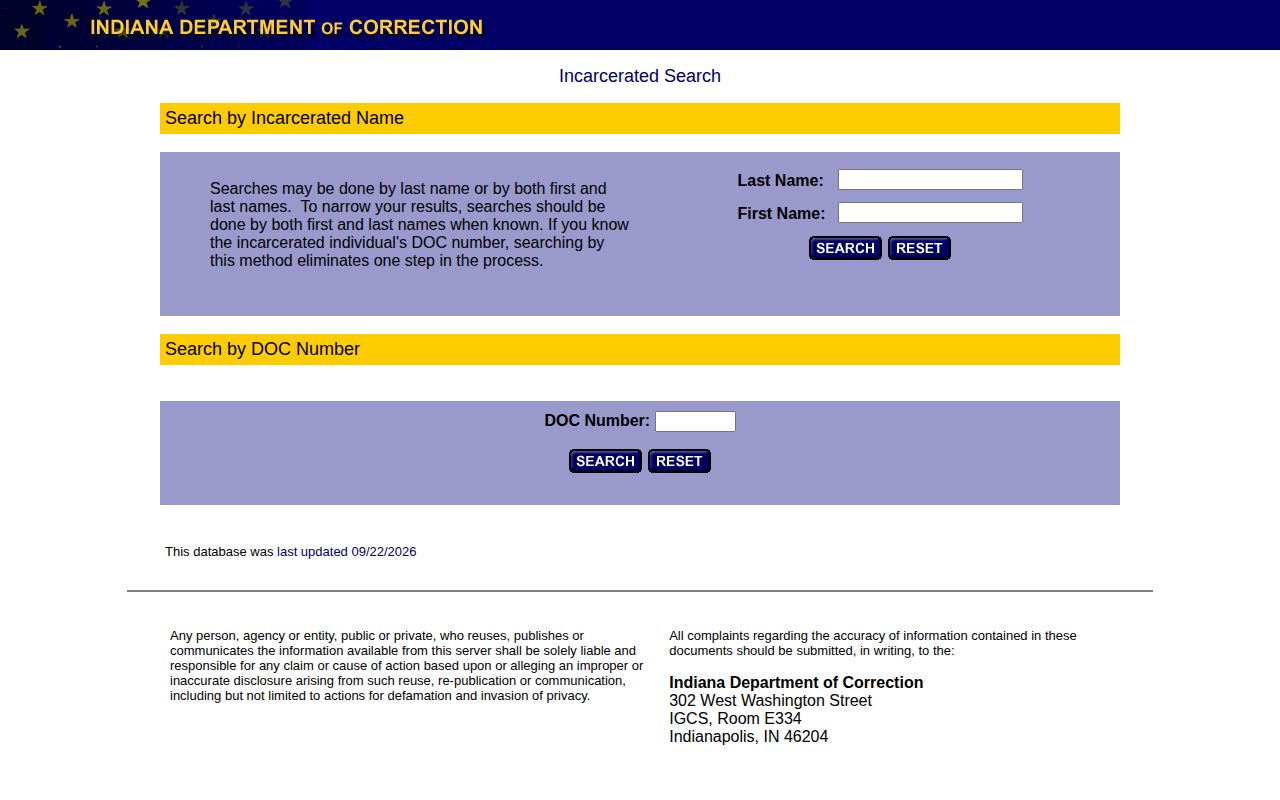
A state-prison result follows sentencing and does not replace a county intake record.
Indiana IDOC and Historical Records
Indiana has two public-facing correction record layers. IDOC's offender locator covers people in state custody or IDOC records. A profile can hold a DOC number, location, sentence information, offense description, cause number, county, projected release data, and an update date. Contents depend on the record. It is not a county booking roster. No booking photo is promised.
Historic prison records take a separate path through the Indiana Archives and Records Administration. Its Department of Correction collections include inmate books from earlier periods, commitment records, and some portrait material. These are archival holdings, not a live arrest feed. Descriptions and restrictions govern access. The agency warns that some images cannot be posted without permission. The Indiana Archives Department of Correction page explains the scope and limits of the historic holdings.
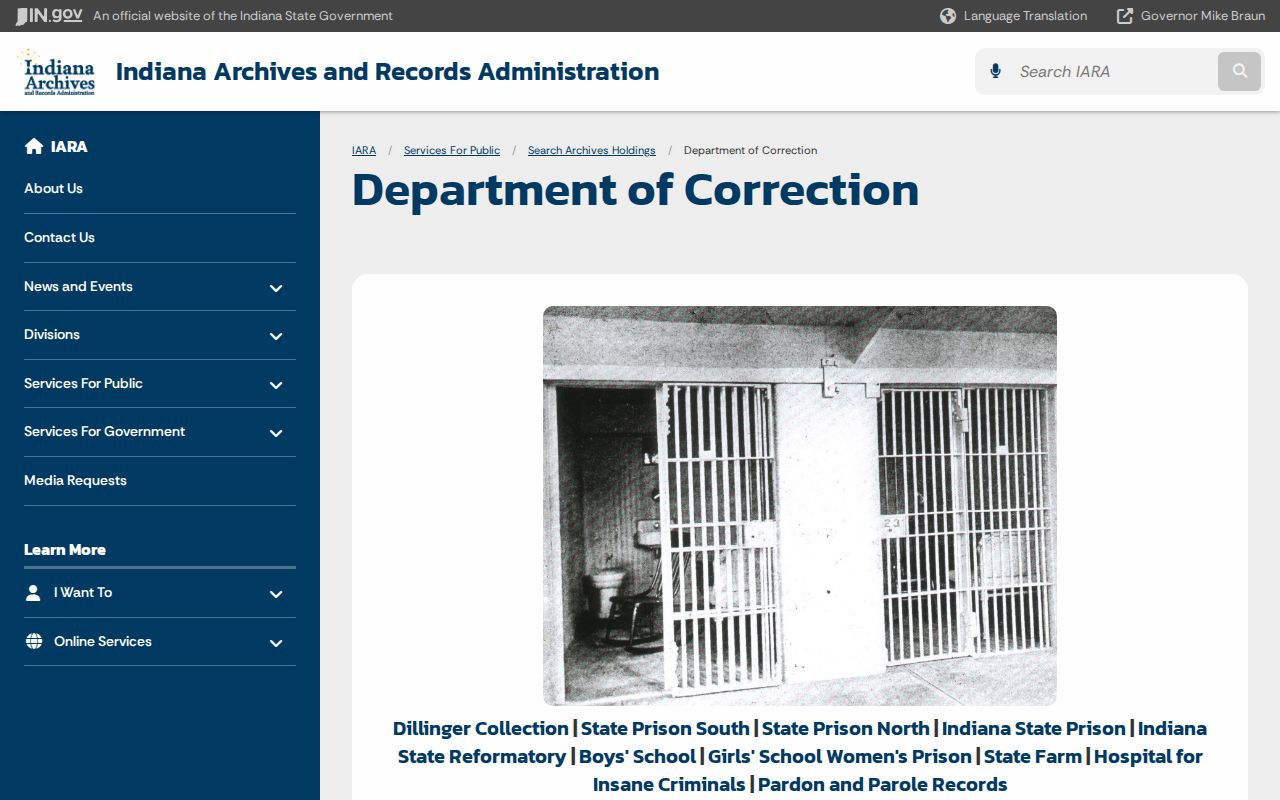
A historic inmate book and a recent county booking entry answer different questions.
Indiana Arrest News Without a Daily List
Indiana State Police runs an online newsroom. It publishes no daily statewide list of every arrest. A release may include a trooper district, incident date, preliminary charge, and booking destination. Coverage is selective, often centered on major incidents, traffic safety, investigations, or agency announcements. A press release is not the jail's custody record.
ISP and the Indiana Criminal Justice Institute publish enforcement and traffic-safety statistics. Program totals describe a campaign or region, not a person-level arrest list or booking count. A district is a routing area. It is not a jail. A release's location does not establish where someone was booked. Confirm custody with the receiving facility.
Newsrooms pick their incidents and may update a story after first publication. The Indiana public-media correction review describes how correction requests differ from the official-record process.
For a news story, ask the newsroom; for the arrest record itself, go to the agency that made it.
Indiana Arrest and Booking Custodians
A single Indiana arrest leaves a trail. Police, jail, court, news, and aggregator files each sit with a different custodian on a different date.
| Record stage | What it means | Likely custodian |
|---|---|---|
| Arrest report | Officer's account of the event and basis for the arrest. | Arresting police agency or sheriff. |
| Booking / intake | Facility's record of processing and the initial custody status. | Receiving county jail or other facility. |
| Released roster entry | A web record that may remain after custody has ended. | County roster provider, if the agency keeps a public view. |
| Court disposition | Later case action that can change or resolve the original charge. | Court clerk and public case system when available. |
Dates are not interchangeable. An incident date, a booking date, a filing date, and a release date each mark a different moment. Together they trace the life of an arrest record. Arraignment means an early court appearance. Bond sets the terms of release. Disposition closes the case. A person freed from custody can drop off a current roster. The jail keeps the booking file anyway, so match county, facility, and date. An empty roster proves nothing about an arrest report or a court result.