
Indiana State Police Arrests
Indiana State Police serves as the state's patrol and investigative arm. It is organized into geographic districts plus specialized units. Troopers make arrests in many settings. Traffic stops, DUI enforcement, and drug investigations can all end with someone in custody. So can warrants and crash responses. The phrase "Indiana State Police arrests" points to the agency's work. It does not name a single database or booking list. A press release may cover one incident in detail, and plenty of arrests never get a statewide release at all.
ISP also runs no statewide detention center. A person arrested by a trooper lands in a county jail or another receiving facility. The destination depends on jurisdiction, capacity, warrants, court ties, or contracts. Where the release says the person went does not settle which jail holds them now. For releases themselves, the Indiana State Police newsroom is the agency's main public channel.
It covers incidents ISP chooses to report, not a way to check every recent booking.
Indiana ISP Arrest News and Logs
ISP publishes news releases and media updates, but research found no current statewide daily arrest log, daily dispatch table, or all-bookings search on the agency site. The newsroom is event-driven. It can report a major investigation, traffic incident, arrest, or enforcement campaign, but a quiet page does not mean no arrest happened. Treat ISP social accounts the same way: the newsroom links agency channels, some oriented toward recruiting and public information, rather than a complete custody feed.
For alerts about new agency releases, ISP links to a GovDelivery subscription page with statewide or district-by-county options for traffic, emergency, Amber/Silver, and other notices. Subscription notices follow the agency's publishing choice; they are not a daily name list. ISP's “In the News” page may collect media coverage, but it is dynamic and can change over time.
| ISP channel | What it can show | Limit |
|---|---|---|
| Newsroom releases | Selected incident, investigation, arrest, and agency announcements. | Not every arrest is published; no fixed all-arrests cadence was found. |
| GovDelivery | Statewide or district/county release subscriptions and public-safety notices. | Alerts follow published releases, not every booking. |
| Social links in newsroom | Agency updates and public information through official ISP accounts. | Some links focus on recruiting; they are not custody records. |
| Daily arrest or dispatch log | No current statewide public ISP log was located in the reviewed sources. | Do not treat an absent log as evidence that no arrest occurred. |
| Traffic-safety reports | Program-level enforcement and campaign statistics. | Totals are not person-level bookings or ISP-only arrest counts. |
The ISP subscription page explains its release categories and district routing.
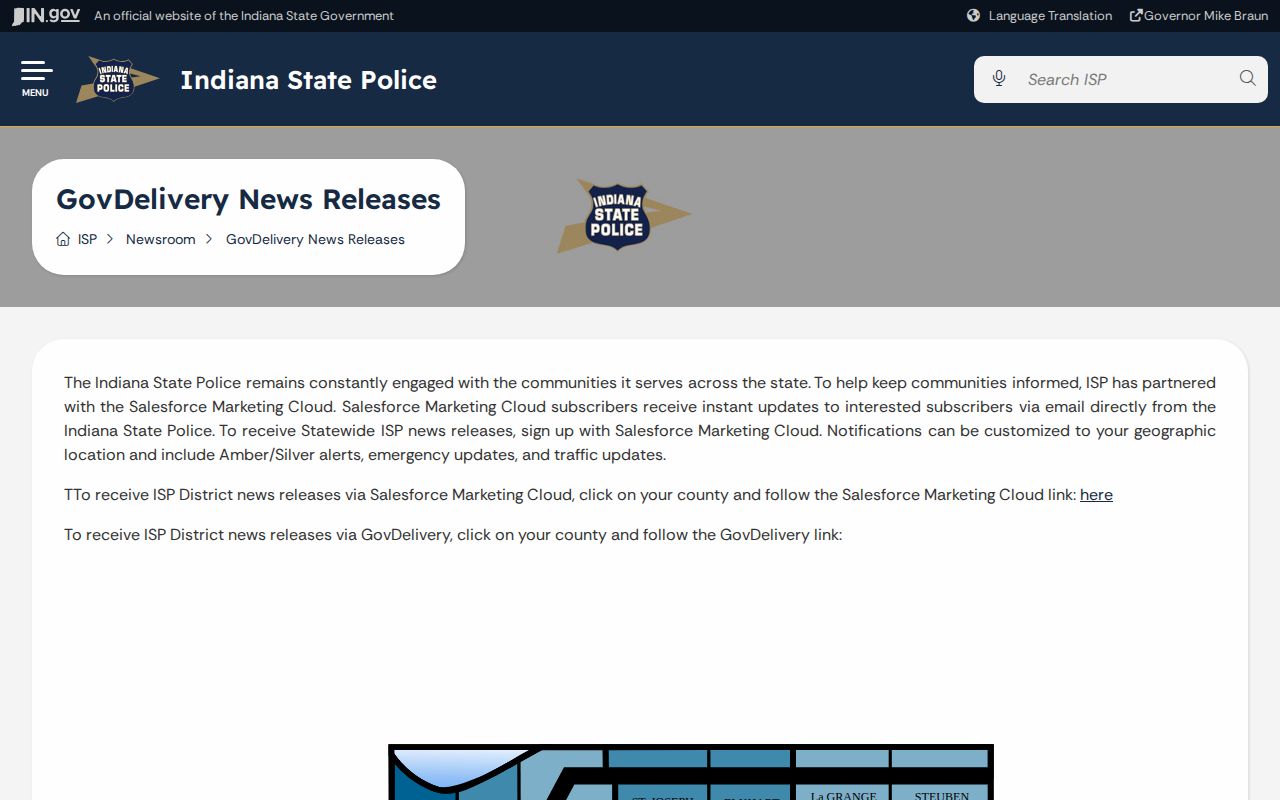
Choosing a district or county narrows your notices. It does not turn GovDelivery into a booking search. The service offers categories for traffic and emergency information, plus Amber and Silver alerts, with statewide or district/county selections. Those choices help you follow ISP releases for one corner of Indiana. They cannot change what the agency publishes or speed up a county jail's booking record.
The newsroom footer also links Facebook, X, Instagram, and YouTube. Treat those channels as announcements, not custody sources. Much of their content leans toward recruiting and agency updates.
One more caution applies to the
material. It may point to stories from other outlets, so it is not an ISP arrest archive. A media story can carry a different publication date, different wording, or its own correction history. When ISP is the source, read the original release. When the question is whether someone is in custody, check the receiving jail.
Find an Indiana ISP Arrest
Sorting out an Indiana State Police arrest takes two steps. First, find the release if the incident made the news. Then confirm where the person was actually booked. A trooper can patrol one district yet drive an arrest to a jail in a different county. That trips up plenty of searches. A release, incident report, jail response, or court entry will pin down the right county. The facility follows from there.
- Search the ISP newsroom by incident topic, county, district, or approximate date. Read the release date and the event date as separate details.
- If a person was named, check the receiving county's official jail or released-record view. The Indiana County Directory routes to the local source.
- For a person whose current status is the question, ask the county jail or use Indiana SAVIN. A custody alert is not an arrest narrative or court disposition.
- If the release does not answer the question, request the ISP report or ask the county custodian for its intake record and photo. State the date and record type.
Skip the IDOC locator when hunting for a county booking. That system only tracks state correctional custody. It picks a person up once they enter IDOC records. A county roster has its own quirk. It can drop someone after release. The jail may still hold the intake file even so. Match the event date against the newsroom publication date. A release can describe an incident and a preliminary charge. It may not confirm that custody continues. A jail entry may post late or vanish after release, and no release showing up does not mean no arrest happened. For present custody, lean on the local booking source. When event details matter, request the originating report.
Where Indiana ISP Arrests Are Booked
ISP districts do not run their own jails. Troopers deliver each arrested person to a county jail or another receiving site. The site is chosen for that case. What decides the destination? Jurisdiction, a warrant, or a court order can all steer it. So can open bed space or a deal with a neighboring county. Knowing the arresting district helps, but it never proves the jail. Confirm the booking location from the report or straight from the receiving agency.
Follow the receiving agency: the county jail or other facility holds the likely current custody status, intake details, and any public booking photo. ISP's newsroom is not the custody record. County interfaces can omit photos or remove a person from current view after release.
Custody doesn't end the paper trail. After sentencing to state prison, the Indiana Department of Correction search tracks the person through IDOC records. It won't surface every ISP arrest or a county's newest bookings. Two other systems sit outside Indiana entirely. Federal prison status lives in the Bureau of Prisons locator. ICE detention runs on its own ICE detainee search with distinct identity fields. A blank result in one does not mean the person is free. Neither tool serves as a county booking source or a mugshot archive.
Each document tells its own story. The arresting agency's report, the county intake record, the court case, and the post-sentence profile are separate records. One can be public while another sits delayed, sealed, or with a different office. Before treating two records as one arrest, match the name carefully. Check the date, county, and case details.
Indiana ISP Arrest Report Requests
ISP handles public-records requests through its contact and public-records page, which points requesters to the NextRequest portal under Indiana's Access to Public Records Act, Ind. Code § 5-14-3. Specificity carries the day. A strong request names an incident or arrest date, a county or district, a person or case number when known, and the exact record type wanted: incident report, daily log, booking information, photo, video, or something else. Narrow wording keeps an arrest record distinct from a crash file or a criminal-history result. Investigatory material may be excepted from release, and the agency's own materials promise no delivery of every item requested.
- Open the ISP public-record request portal and select the route for a new records request.
- Describe the event with the date range, county or district, and the person or case number if known. Be precise about the record type.
- Ask whether a copy or labor charge applies and request an estimate before the agency does billable work. The public pages reviewed did not list a universal ISP arrest-report fee or guaranteed turnaround.
- Read any response for the record scope and the cited reason for withholding. APRA response deadlines govern acknowledgment, not a guaranteed date for full production.
Timing under Indiana APRA follows fixed windows. An oral or hand-delivered request generally draws a response within 24 business hours, and a written request sent by mail, email, or fax within seven calendar days. Those clocks measure response, not delivery of a copy. ISP may offer a production estimate, state that no responsive record exists, keep reviewing, or deny access on legal grounds. A denial should cite the statutory exception and name the custodian, so ask for an estimate before billable copying or review work begins. The ISP public-record portal is the intake point for all of it.
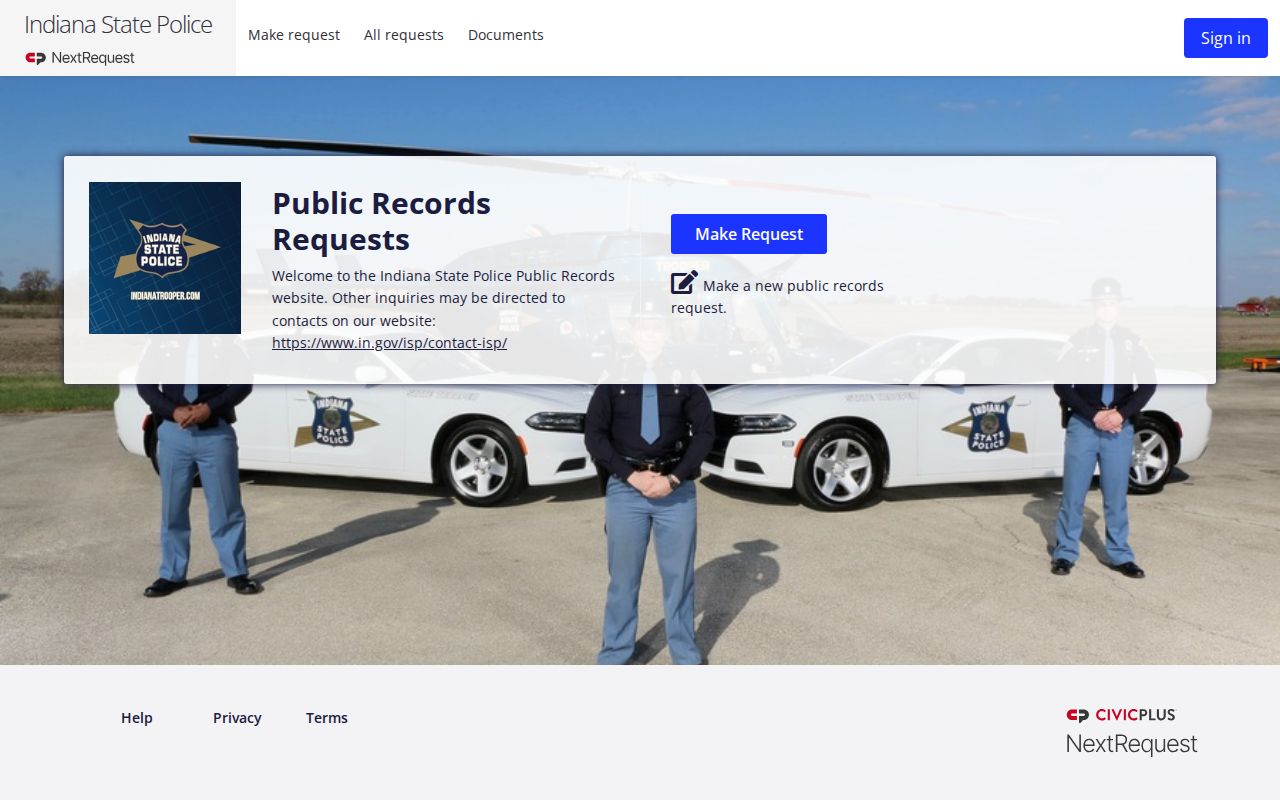
An APRA request cannot unlock every record. A specific exception or court rule can shield one from the public.
Money also splits along these lines. ISP's limited criminal-history fee schedule prices a seven-dollar state-only product plus an online processing charge. That buys no arrest report, booking photo, or county roster search. Crash reports take a separate BuyCrash route. They are not arrest records. Aim each request at the office that holds the record.
| Record sought | Starting route | What it does not replace |
|---|---|---|
| ISP incident or arrest report | ISP APRA request portal, with date, district or county, person, and record type. | The receiving jail's live custody status or intake photo. |
| County booking or release record | County sheriff or jail roster, then that agency's records custodian. | The ISP incident report or statewide criminal-history product. |
| Limited criminal history | ISP's separate fee-based criminal-history service. | A complete incident narrative, daily log, or booking image. |
| Crash report | ISP-linked BuyCrash service for eligible crash records. | An arrest report or a county jail record. |
Breadth creates its own problem. One agency may hold a trooper's incident file. The booking record sits with a separate county. The public search product and the crash-report vendor follow their own scope and fee rules. Ask the office that created the record. Don't assume one ISP request reaches every later custody or court event.
Indiana ISP Districts and Enforcement
ISP's district page lists the Capitol Police plus its geographic field districts. Think of a district as a service area for routing coverage and notices. It is no jail, court, or booking database. Fourteen field districts appear on the current list. A district subscription can help locate an ISP release. So can a county subscription. It will never show arrests made by local police or sheriffs.
| District | Location named by ISP |
|---|---|
| 13 | Lowell |
| 14 | Lafayette |
| 16 | Peru |
| 21 | Toll Road |
| 22 | Fort Wayne |
| 24 | Bremen |
| 33 | Bloomington |
| 34 | Jasper |
| 35 | Evansville |
| 42 | Versailles |
| 45 | Sellersburg |
| 51 | Pendleton |
| 52 | Indianapolis |
| 53 | Putnamville |
The ISP district list helps place a release in the agency's structure.
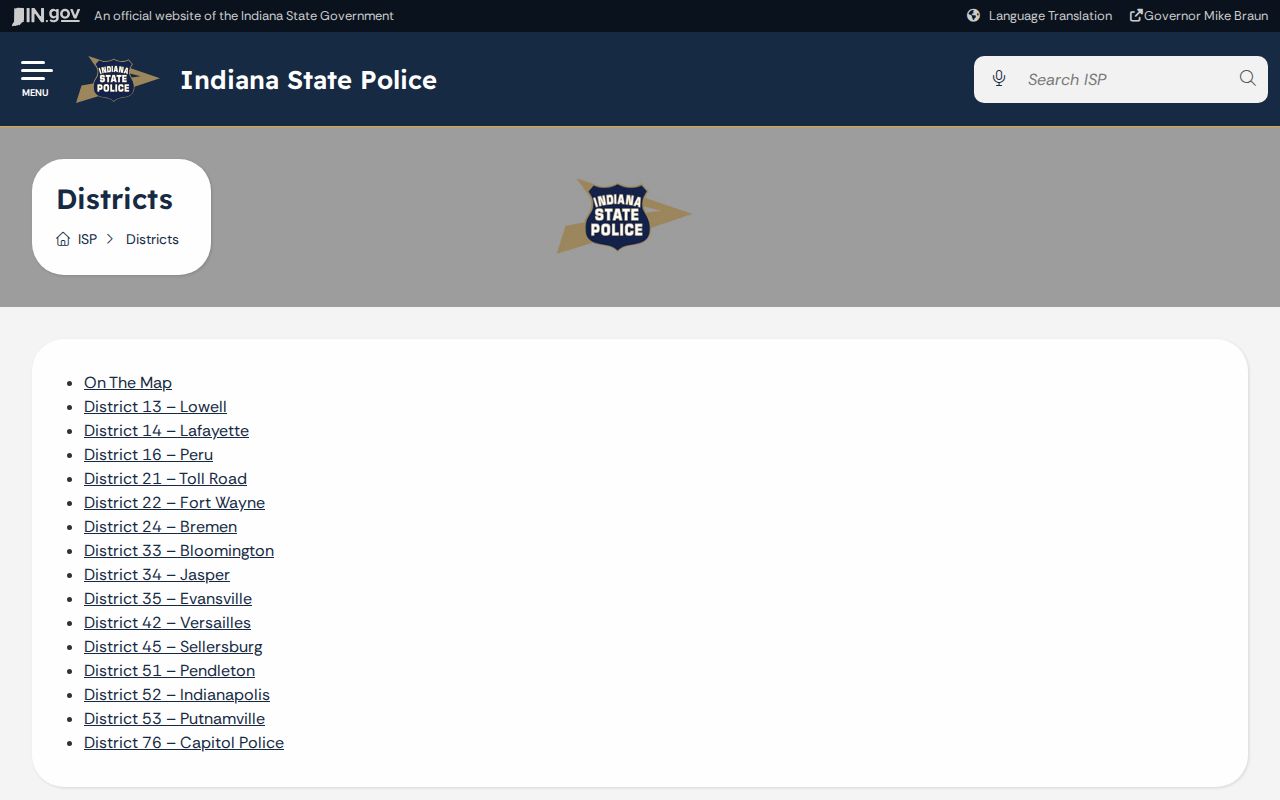
District names are routing labels, not places where people are held.
Traffic-safety reports cover programs, not individual bookings. The Indiana Criminal Justice Institute's FY22 report describes DUI Task Force work. It spans 48 counties and ISP districts. The work includes checkpoints, stops, citations, warnings, and DUI arrests. Its FY24 report logs later traffic-safety activity and national mobilizations. Totals like these summarize work across many agencies and places. They are not ISP-only bookings and prove nothing about any person. They name no arrestee or booking jail. For a named incident, start with the release. The receiving county's record is the other useful source.